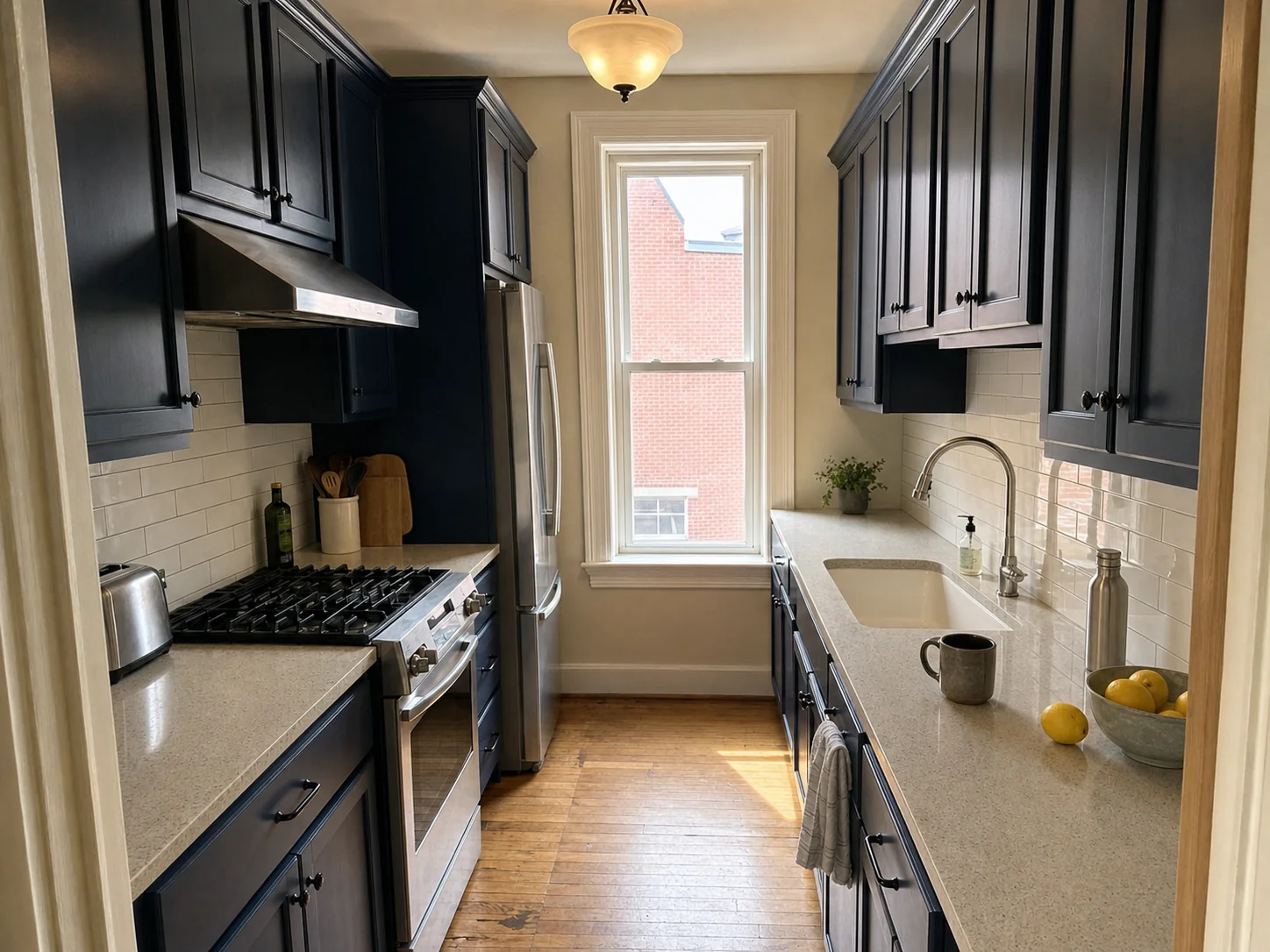
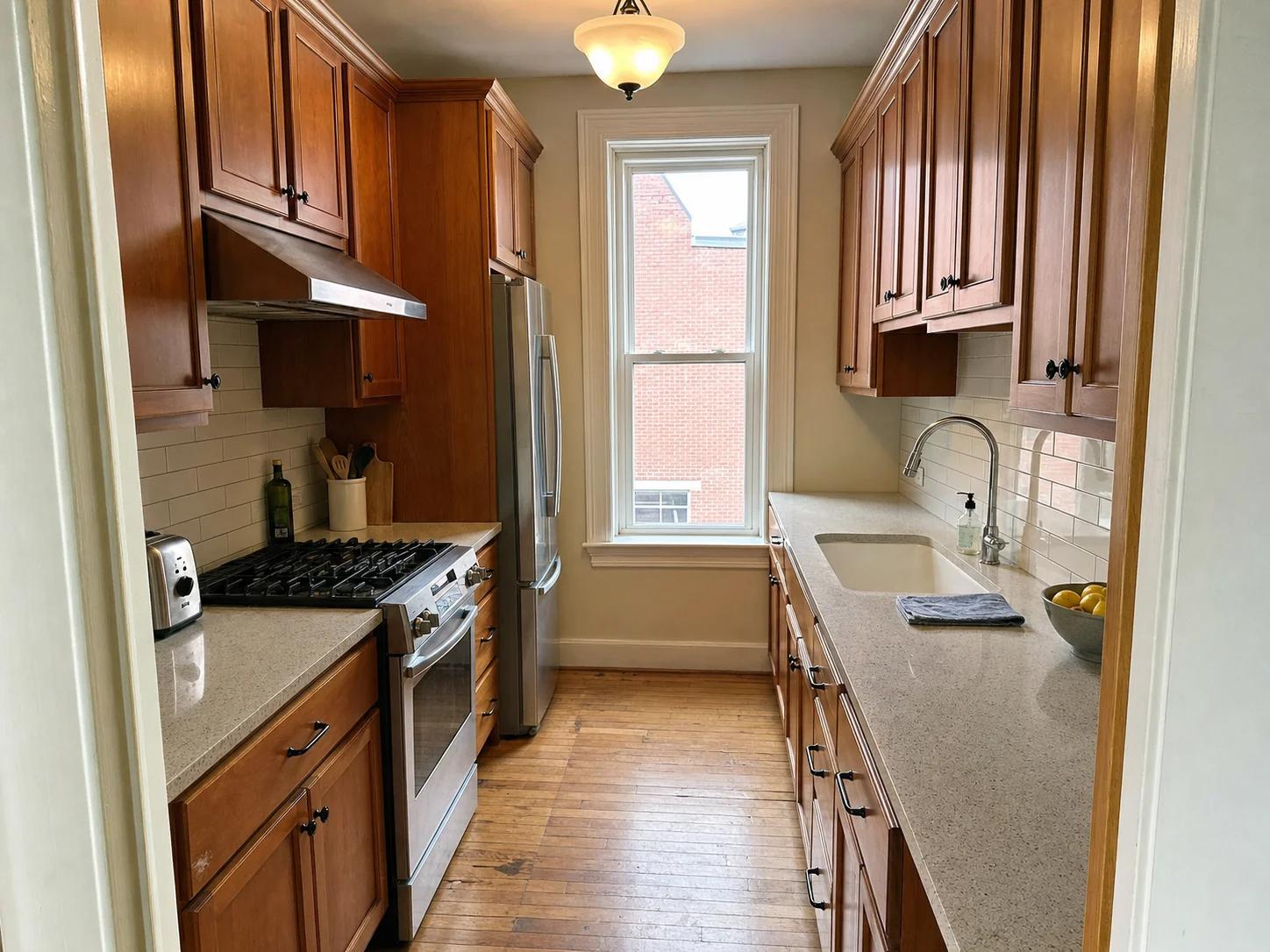
Replacement was on the table first. It usually is. What settled the question here was the condition of the cabinetry itself.
1The Challenge
The kitchen functioned well, but the warm cherry finish covered every door and drawer front and made a narrow galley feel narrower. The homeowner wanted a kitchen that felt current without giving up the layout, the counters, or the tile already in place.
2The Decision
New cabinetry was priced first. Replacement came in substantially higher than refinishing the cabinets already there, and it would have meant tearing out and rebuilding around counters and tile in good condition. Because the boxes, doors, and drawer fronts were structurally sound, painting was the sensible route — the trade-off our guide to painting cabinets versus replacing them works through in detail.
3The Approach
This became a finish project rather than a demolition project. Doors and drawer fronts were removed and labeled, surfaces were cleaned and prepared, and the cabinetry was refinished in a deep navy — part of the same saturated family covered in our roundup of the best cabinet paint colors for DC kitchens. The galley layout stayed. So did the counters, the subway tile, and the black hardware.
4The Result
The after photo shows the dark finish anchoring the room while the pale counters, white tile, and wood floor carry the light — the opposite of what the cherry finish was doing. The black hardware now reads as deliberate against the navy, and the kitchen looks rebuilt without having been rebuilt.