
The Problem
Beige walls and beige paneling read as one undifferentiated surface. The wainscoting was there, but invisible; the fireplace had nothing to sit against; and the furniture looked placed in the room rather than chosen for it.
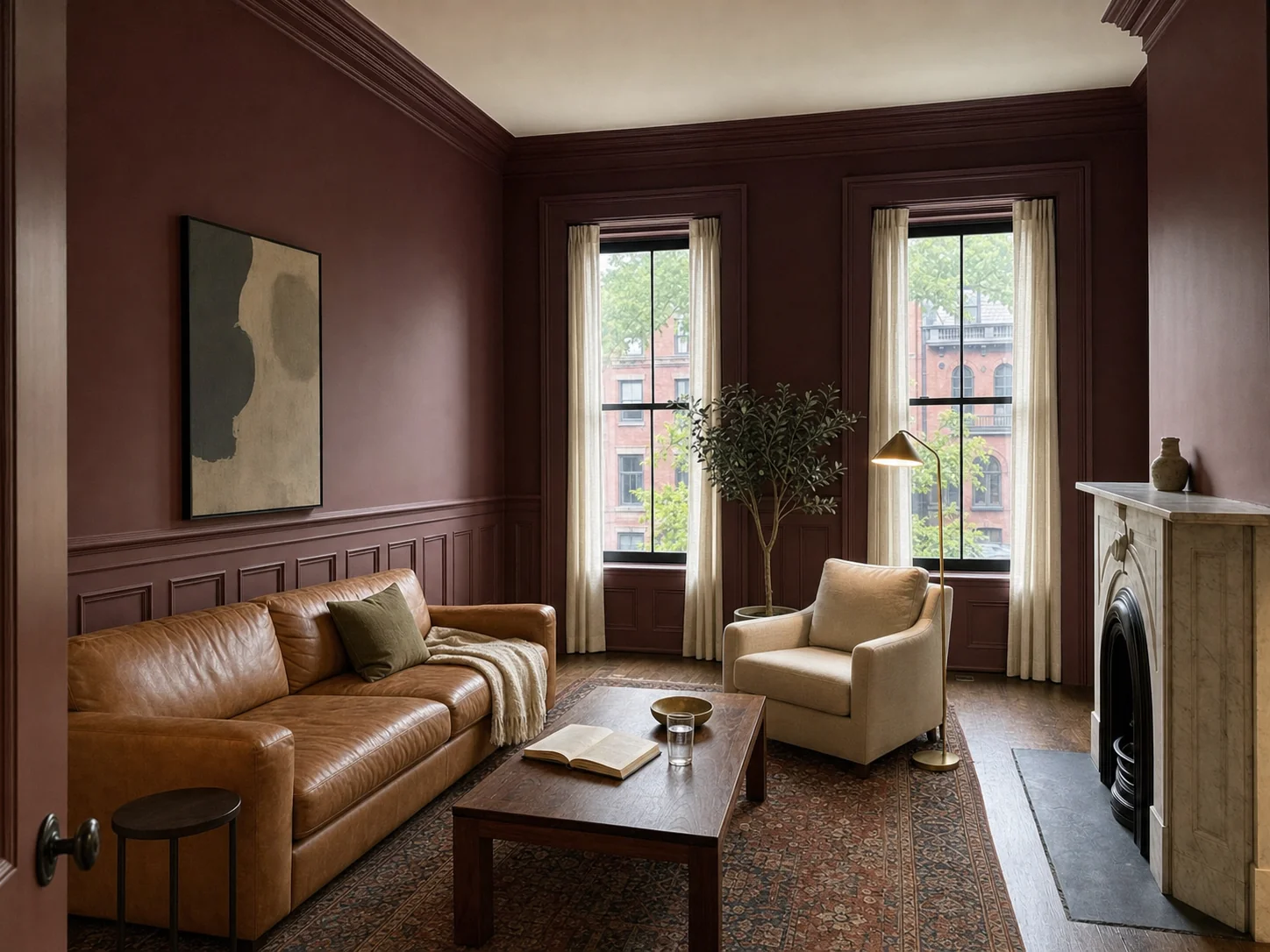
Painters DC transformed this Capitol Hill, Washington, DC living room with deep burgundy interior paint across the plaster walls and paneled wainscoting. The project preserved the marble fireplace, bright ceiling, and historic millwork while giving the rowhouse a richer, more architectural finish.
A rowhouse parlor with good bones — tall windows, paneled wainscoting, a marble fireplace — held back by a pale, flat color. Only the paint changed.
A living room in a Capitol Hill rowhouse — see painting services in Capitol Hill.
Plaster walls and paneled wainscoting painted as a single, coordinated scope.
Pale beige gave way to a deep burgundy carried across walls and paneling alike.
The marble fireplace, the light ceiling, the tall windows, and the room's furniture and layout.
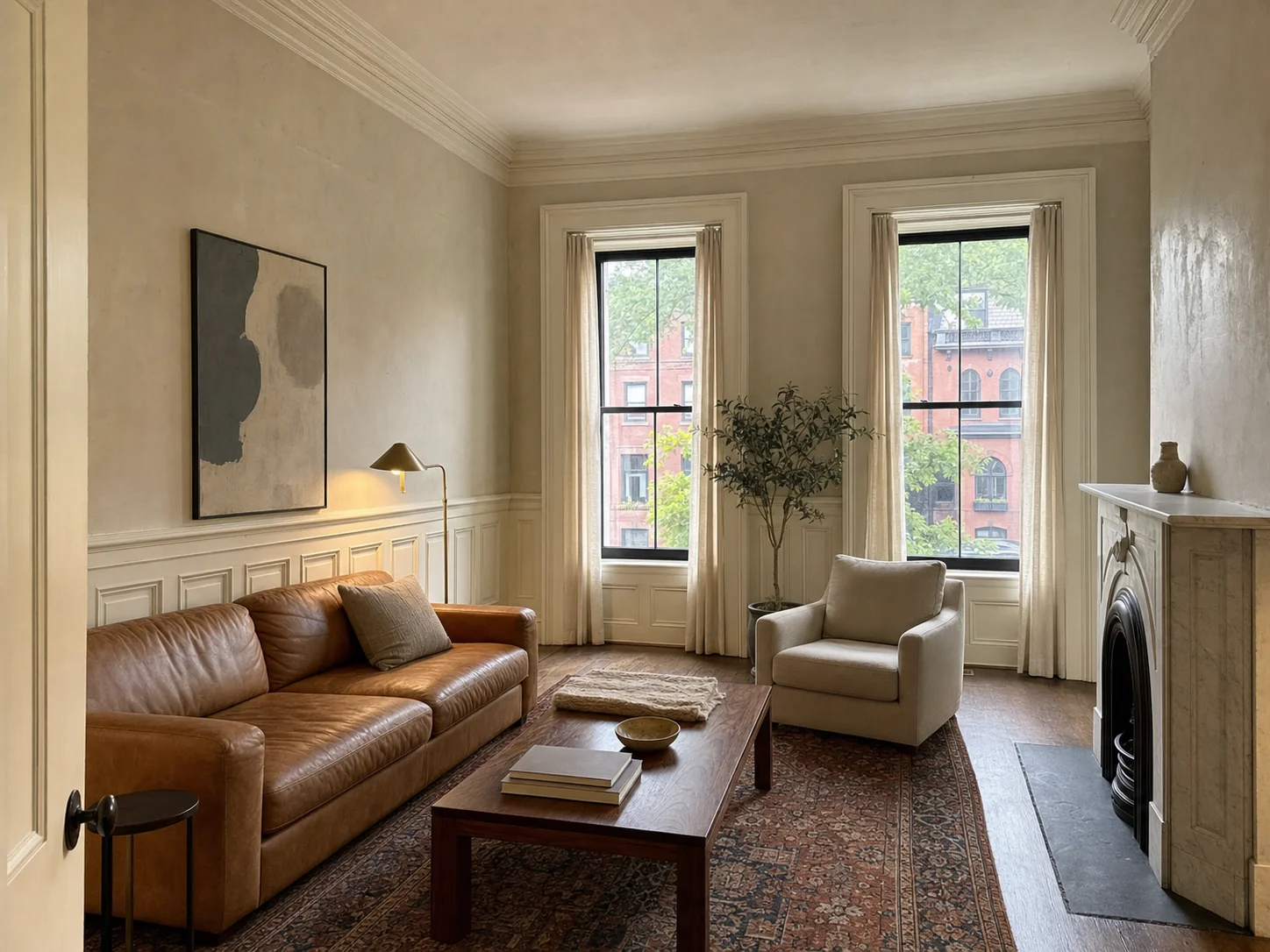
Same furniture, same layout, same daylight from the same windows — the color is what changed.
The before photo shows a room doing everything right architecturally and still reading flat. Wainscoting, a marble mantel, and full-height windows were all there — but a pale beige finish gave the eye nothing to hold onto, so the millwork disappeared into the wall behind it.
Beige walls and beige paneling read as one undifferentiated surface. The wainscoting was there, but invisible; the fireplace had nothing to sit against; and the furniture looked placed in the room rather than chosen for it.
Rather than change the room, the homeowner changed its color — the least disruptive way to reset a parlor like this. Choosing a saturated shade for a north-facing rowhouse room is exactly the judgment a professional color consultation exists to settle, against the actual daylight and the fixed marble tones in the room.
Walls and paneled wainscoting were carried in the same deep burgundy so the paneling reads as architecture rather than a horizontal break. The ceiling stayed light to hold the room's height, and the marble fireplace was left untouched — the same coordinated approach behind our interior painting services in Washington DC.
The after photo shows a room with a defined envelope. The wainscoting now casts its own shadow lines, the marble mantel stands out against the darker field, and the leather sofa and patterned rug read as deliberate choices. Nothing moved — the room simply became legible.
Homeowners often hesitate over a saturated color in a rowhouse parlor. As general guidance — not a claim about any single job — the way a deep color lands depends on what you leave alone as much as what you paint.
Our guide to choosing paint colors for darker rooms works through how light, orientation, and finish interact before you commit to a shade.
Book a free consultation →Capitol Hill interiors are largely plaster rather than drywall, with paneled millwork that predates the paint on it. Two things follow from that, and both are about preparation rather than product.
Older plaster carries hairline cracks, patches, and subtle undulation. A deep color shows surface condition more than a pale one does, which makes wall preparation the part of the job that decides the result.
Wainscoting means inside corners, panel edges, and a chair rail — all of it cut in by hand. It is slower than open wall area, and it is where a professional finish separates itself from a weekend one.
Walls and millwork are not automatically the same finish. Our guide to eggshell versus satin covers how sheen changes both durability and how a saturated color reads on the wall.
Parlors open onto halls and stairs, so a color decision rarely stops at one doorway. Our DC rowhouse painting guide covers how to plan color across connected rooms.
Yes. Older plaster walls hold saturated colors well once the surface is properly prepared — the finish depends far more on preparation and the condition of the plaster than on the depth of the color itself. On this Capitol Hill project the walls and the paneled wainscoting were carried in the same deep burgundy.
Not necessarily. In this rowhouse the ceiling was left light and the tall windows were kept clear, so the room reads as enclosed and architectural rather than cramped. Carrying one color across walls and wainscoting removes the visual break that would otherwise cut the room in half.
Yes. Walls, paneled wainscoting, and surrounding millwork are usually treated as one scope so the finished room reads as a whole. In this project the wainscoting was painted with the walls, while the marble fireplace surround was left as it was.