
The Challenge
Maple shaker doors, a matching island, and a farmhouse sink — a kitchen that worked and looked builder-grade. The homeowner wanted the room to feel custom without losing the layout, the counters, or the sink.
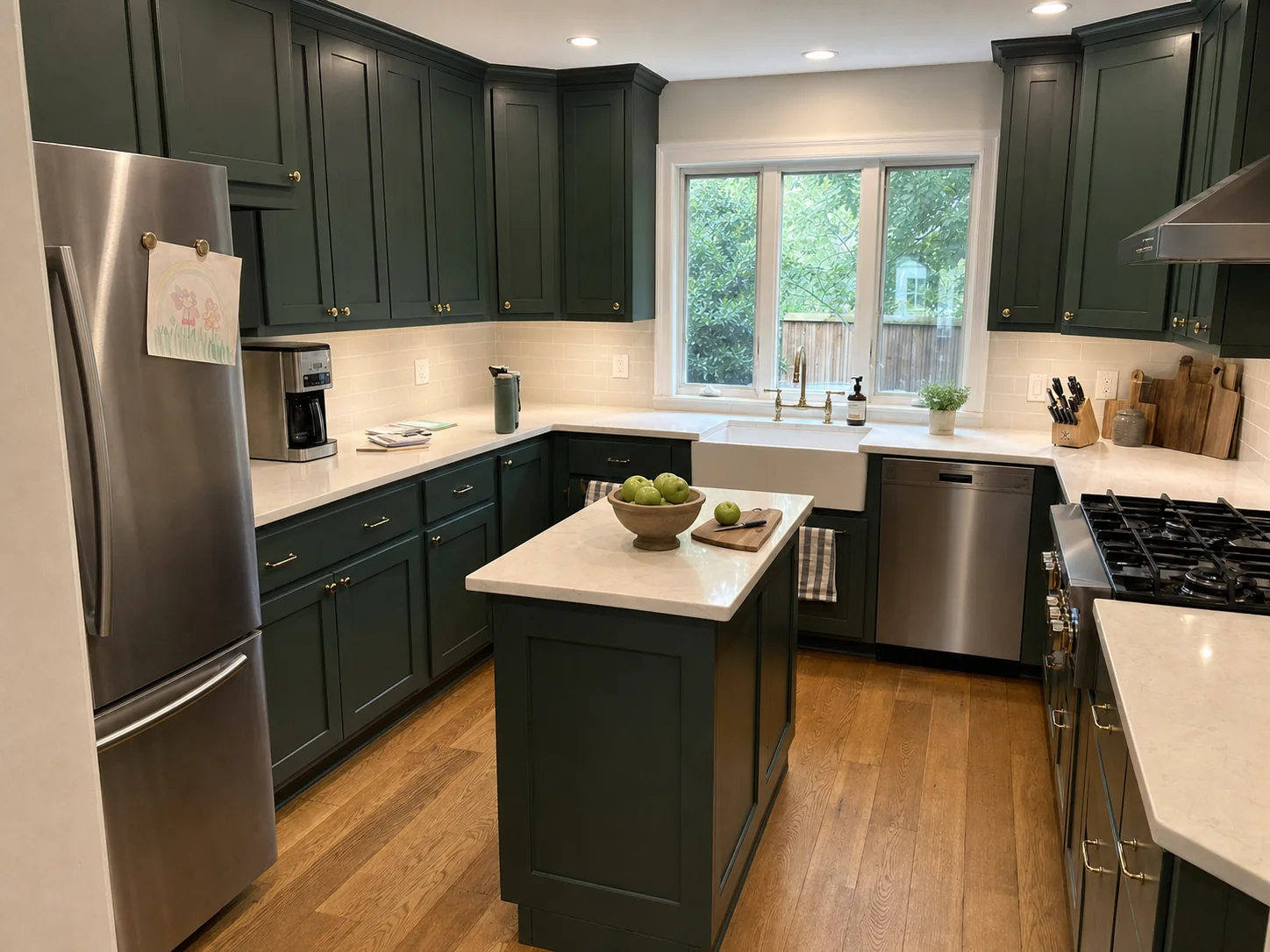
Painters DC completed kitchen cabinet painting and refinishing in this Chevy Chase, Washington DC home, taking sound maple shaker cabinets and the matching island to a deep forest green. Refinishing kept the kitchen usable and cost far less than replacing cabinetry that was still good.
A family kitchen with sound maple shaker cabinetry and a matching island. Only the finish had aged out.
A family kitchen — see painting services in Chevy Chase.
Doors, drawer fronts, face frames, and the island refinished in place.
Builder-grade maple gave way to a deep forest green on every visible surface.
The farmhouse sink, white counters, brass hardware, and garden-facing windows.
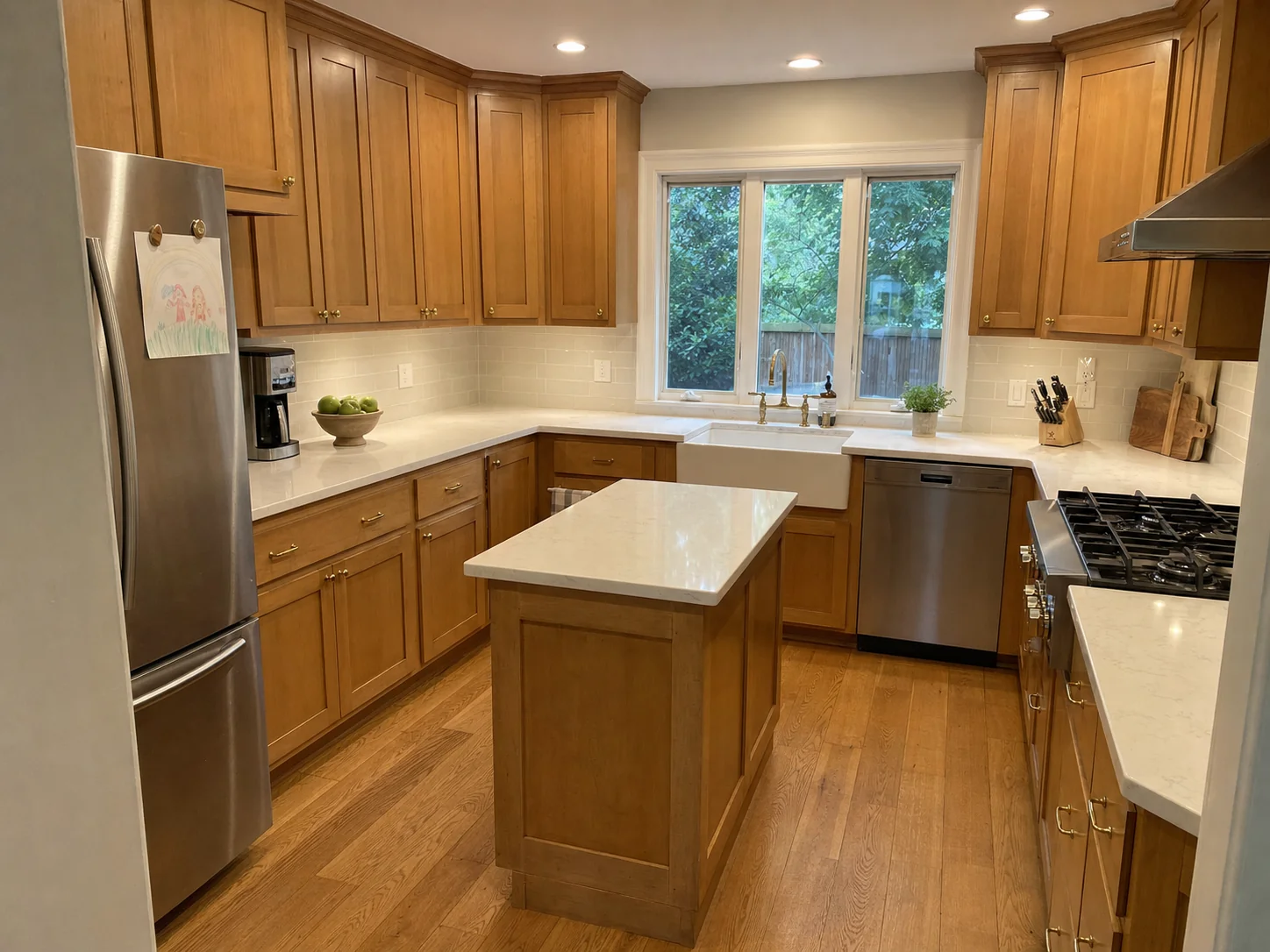
Same room, same joinery, same layout — the finish is what changed.
Nothing was wrong with this cabinetry. It simply looked like every other kitchen of its era.
Maple shaker doors, a matching island, and a farmhouse sink — a kitchen that worked and looked builder-grade. The homeowner wanted the room to feel custom without losing the layout, the counters, or the sink.
Replacement was priced and set aside. New cabinetry cost substantially more than refinishing the cabinets already in place, and it would have meant removing counters and the sink around a family kitchen. Because the boxes and doors were sound, painting was the practical route — the comparison our guide to painting cabinets versus replacing them sets out in full.
Doors and drawer fronts came off and were labeled, surfaces were degreased and sanded, and cabinets, frames, and the island were refinished in a deep forest green — the sage-and-forest family covered in our roundup of the best cabinet paint colors for DC kitchens. Counters, sink, hardware, and windows stayed exactly where they were.
The island now reads as a deliberate centerpiece rather than more of the same wood, and the white counters and brass hardware have something to stand against. The kitchen looks rebuilt without having been rebuilt — and the household kept using it throughout.
As general guidance rather than a claim about any one job: refinishing existing cabinetry is worth weighing seriously whenever the structure underneath is still good.
Our guide to cabinet painting cost in Washington, DC breaks down how kitchen size, cabinet condition, and finish choices drive pricing, and how painting compares with replacing.
Book a free consultation →Kitchen cabinets are the hardest-working painted surface in a house. What separates a finish that lasts from one that chips happens before any color goes on.
Doors and drawer fronts are removed and labeled so every piece returns to the opening it came from — including the island, which has its own set.
Cabinet surfaces carry cooking residue that no coating bonds through. Degreasing and sanding to a dull, sound surface is the step that decides the result.
Cabinets need enamel formulated for cabinetry, not wall paint. Sheen is part of that decision — see eggshell versus satin.
A coat feels dry long before it hardens. Respecting cure time between coats and before heavy use protects the finish — see our cabinet painting timeline.
This kitchen has daylight from garden-facing windows, white counters running the length of the run, and a white farmhouse sink anchoring the middle. Those surfaces stay light, so a deep green on the cabinetry reads as depth rather than weight, and the island stops competing with the perimeter and starts leading it. The brass hardware, nearly invisible against maple, now reads as a chosen detail. Settling a saturated color against your own counters, sink, and light is what a color consultation is for.
In most kitchens with sound cabinetry, yes — and the gap widens once you count removing and refitting counters, sinks, and backsplash around new boxes. Replacement earns its cost when the cabinetry is failing or the layout itself has to change.
Yes. In this Chevy Chase kitchen the island was refinished with the perimeter cabinets in the same deep green so the room reads as one piece of work rather than two. An island can also be treated as a deliberate contrast — that is a design decision, not a technical limit.
Largely, yes. Doors and drawer fronts are removed for finishing, so boxes stay open while counters, sink, and appliances remain in use. The schedule is driven by preparation and cure time — our cabinet painting timeline guide explains how those working days are usually structured.