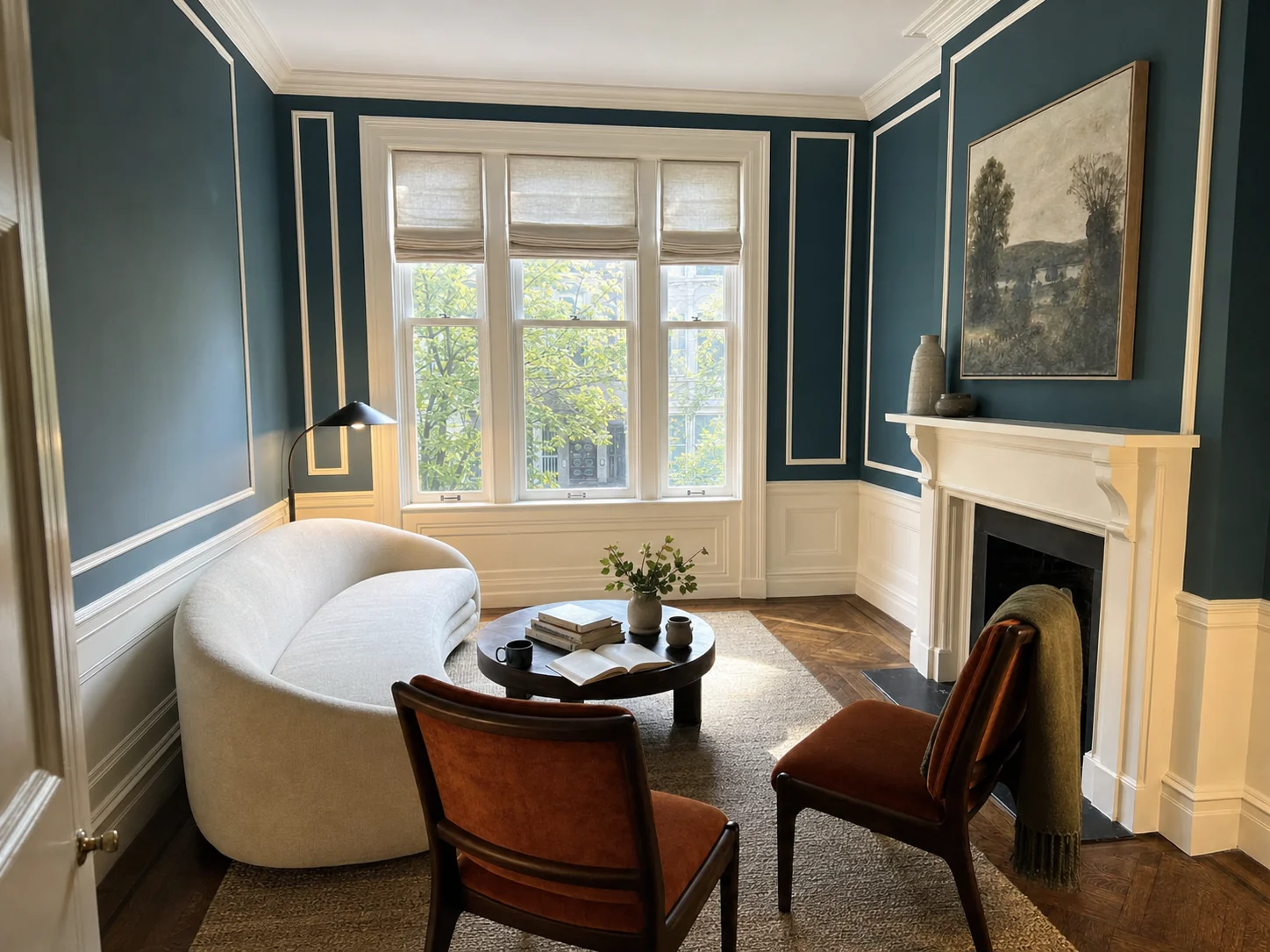
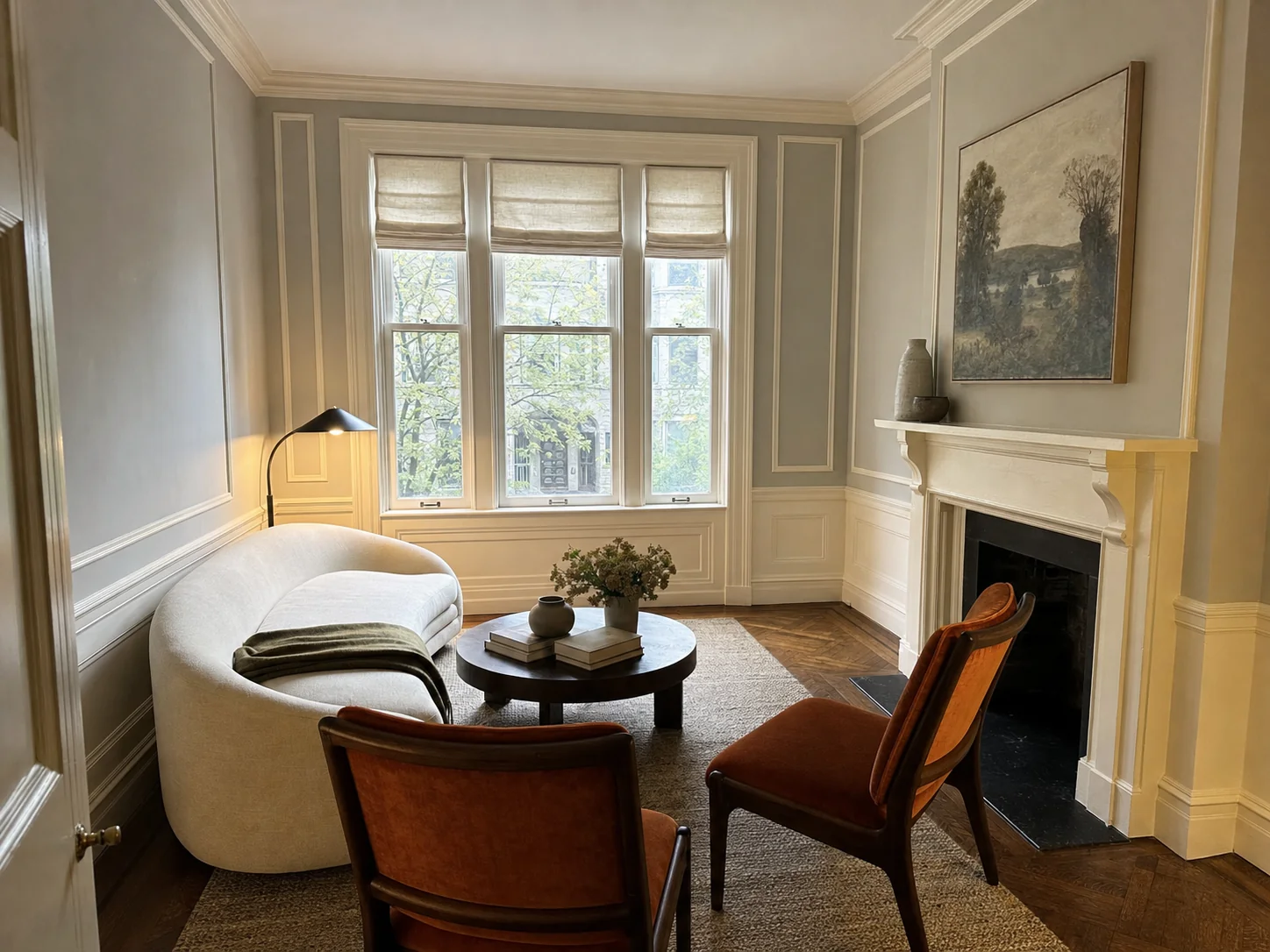
The room was not tired. It was undifferentiated — walls, panels, and wainscot all reading as one surface.
1The Challenge
Picture-frame moulding, a wainscot, and a stone mantel were all present and all invisible. A single pale gray-blue covered the walls and the millwork alike, so the panel detail flattened out and the room read plainer than its architecture.
2The Decision
Repainting everything one shade again would have repeated the problem. Separating wall color from trim color was the change that made the existing millwork do its job — the kind of scope decision that sits inside interior painting in Washington, DC rather than any structural work.
3The Approach
Walls went deep teal; moulding, panel frames, and wainscot were picked out in white. That means a straight, deliberate line at every panel edge and a consistent sheen across faces that catch light differently — the part of the job that is hand-cut, not rolled. The floors, mantel, shades, and furniture stayed exactly where they were.
4The Result
The panel frames now cast their own shadow lines, the wainscot reads as a base rather than a smudge, and the mantel has a field to stand against. The room gained depth and structure without gaining a renovation.