
The Challenge
Glass-front uppers, inset doors, and a professional range made this a serious kitchen. The dark cherry finish, though, absorbed the light and made a well-proportioned room feel smaller and heavier than it is.
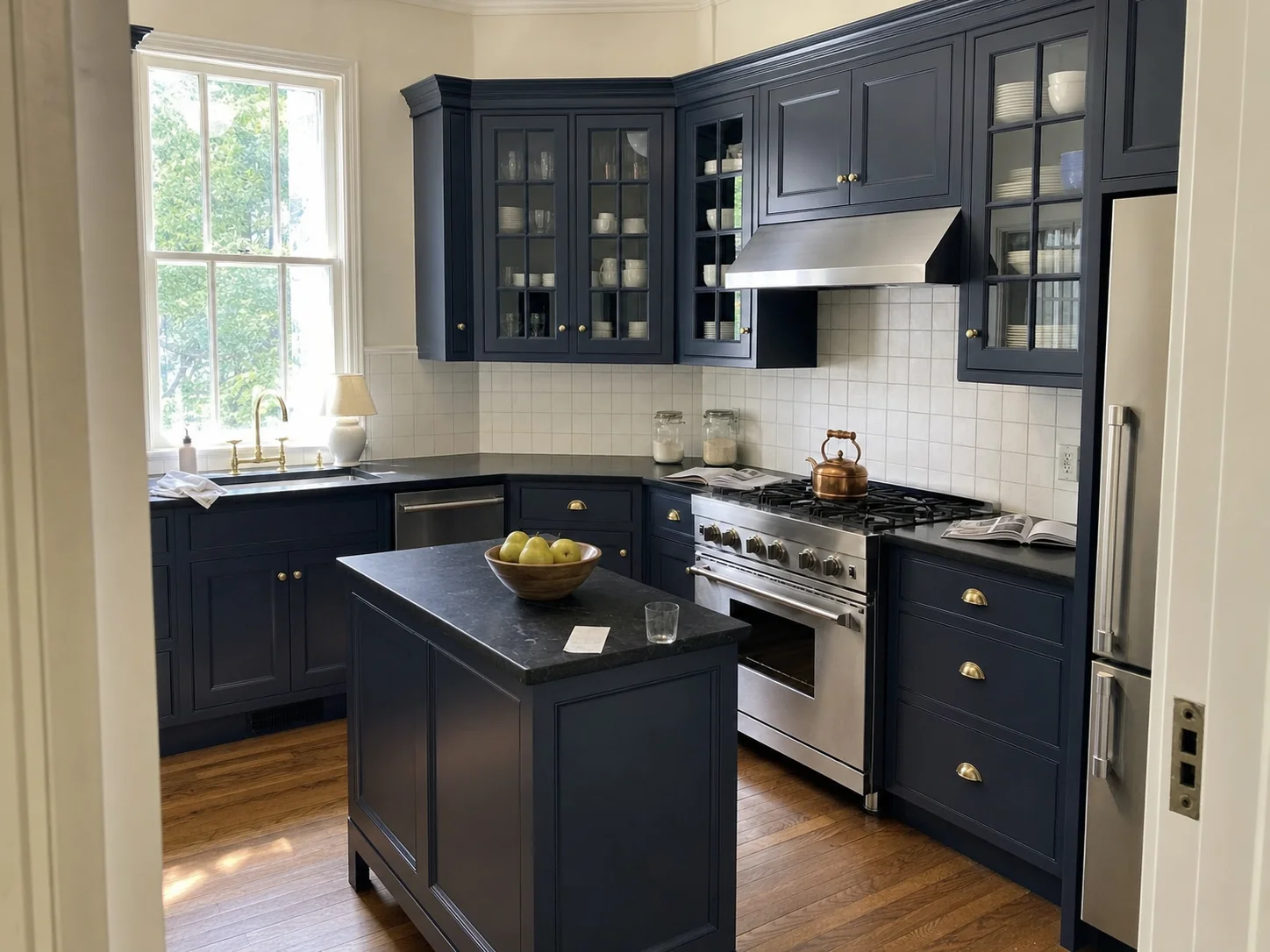
Painters DC refinished the kitchen cabinets in this Kalorama, Washington DC home, taking fine traditional cherry cabinetry with glass-front uppers to a deep navy. The millwork was excellent, so painting preserved it at a fraction of the cost and disruption of replacement.
A period kitchen with glass-front uppers, inset doors, and a professional range. The cabinetry was the asset; the finish was the problem.
A period home kitchen — see painting services in Kalorama.
Inset doors, glass-front uppers, drawer fronts, and face frames refinished in place.
Dark cherry gave way to a deep navy across every painted cabinet surface.
Glass mullions, brass cup pulls, dark stone counters, white tile, and the range.
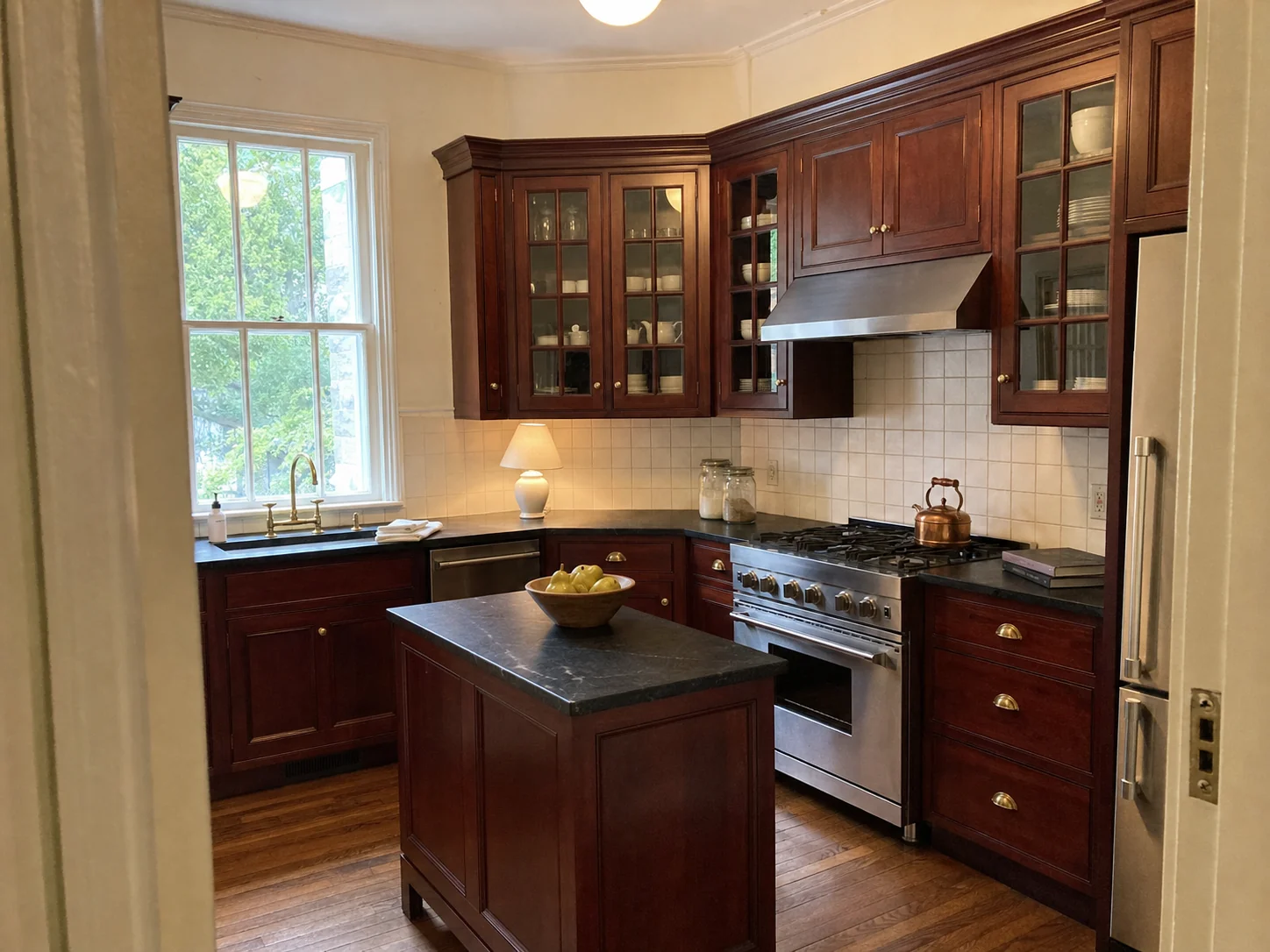
Same room, same joinery, same layout — the finish is what changed.
In a period home, the cabinetry is often the most expensive thing in the room to reproduce — and the easiest to regret losing.
Glass-front uppers, inset doors, and a professional range made this a serious kitchen. The dark cherry finish, though, absorbed the light and made a well-proportioned room feel smaller and heavier than it is.
Replacing cabinetry of this quality means commissioning new inset doors and glazed uppers — expensive, slow, and a real risk of losing detail that suits the house. Because the boxes, doors, and glazing were sound, refinishing was the better trade, the same comparison our guide to painting cabinets versus replacing them sets out.
Doors and drawer fronts were removed and labeled, glazed uppers handled around their mullions, surfaces degreased and prepared, and everything refinished in a deep navy — a shade from the family covered in our roundup of the best cabinet paint colors for DC kitchens. Counters, tile, hardware, and the range stayed.
The navy holds the room together against the white tile while the glass mullions and brass cup pulls finally read as detail rather than more brown. The kitchen looks specified rather than dated, and every piece of original millwork is still in it.
As general guidance rather than a claim about any one job: when inset doors, glazed uppers, and face frames are sound, refinishing keeps joinery that is slow and costly to reproduce.
Our guide to cabinet painting cost in Washington, DC breaks down how kitchen size, cabinet condition, and finish choices drive pricing, and how painting compares with replacing.
Book a free consultation →Older cabinetry is usually better built and harder to paint. The detail that makes it worth keeping is the same detail that makes preparation slow.
Glass-front uppers mean cutting to mullions and glazing rather than spraying a flat door. It is slower work, and it is why the glass still looks like glass afterward.
Inset doors close into their frames, so film build has to be controlled or doors bind. Preparation and coat thickness matter more here than on overlay doors.
Cabinet surfaces carry cooking residue no coating bonds through. Degreasing and sanding to a dull, sound surface is the step that decides the result.
A coat feels dry long before it hardens, and inset doors are unforgiving about early use — see our cabinet painting timeline.
The fixed materials here are dark stone counters and bright white tile — high contrast already. Cherry sat between them and muddied both. A deep navy takes a clear side: it reads against the white tile, sits comfortably with the dark stone, and gives the brass cup pulls and glass mullions an edge they never had against wood. The result is a kitchen that looks chosen rather than inherited, which is the judgment a color consultation exists to settle against your own counters, tile, and light.
Yes, and it is the part of the job that takes the most patience. Glazed uppers are cut in around mullions and glazing rather than sprayed like a flat door, which is slower than standard cabinet work but keeps the glass clean and the mullion lines sharp.
That is a design decision, not a technical one. Where the joinery is sound and the finish is what dates the room — as here — painting keeps inset doors and glazed uppers that would be expensive to commission again, and changes the room without losing its character.
They should, provided film build is controlled. Inset doors close into their frames, so preparation and coat thickness matter more than on overlay doors, and cure time has to be respected before doors are put back into daily use.