
The Challenge
A glossy greige covered the upper walls and read as circulation space — the kind of neutral that works in a hallway and disappears in a bedroom. The wainscoting, chair rail, and trim were all there, but the room felt unassigned.
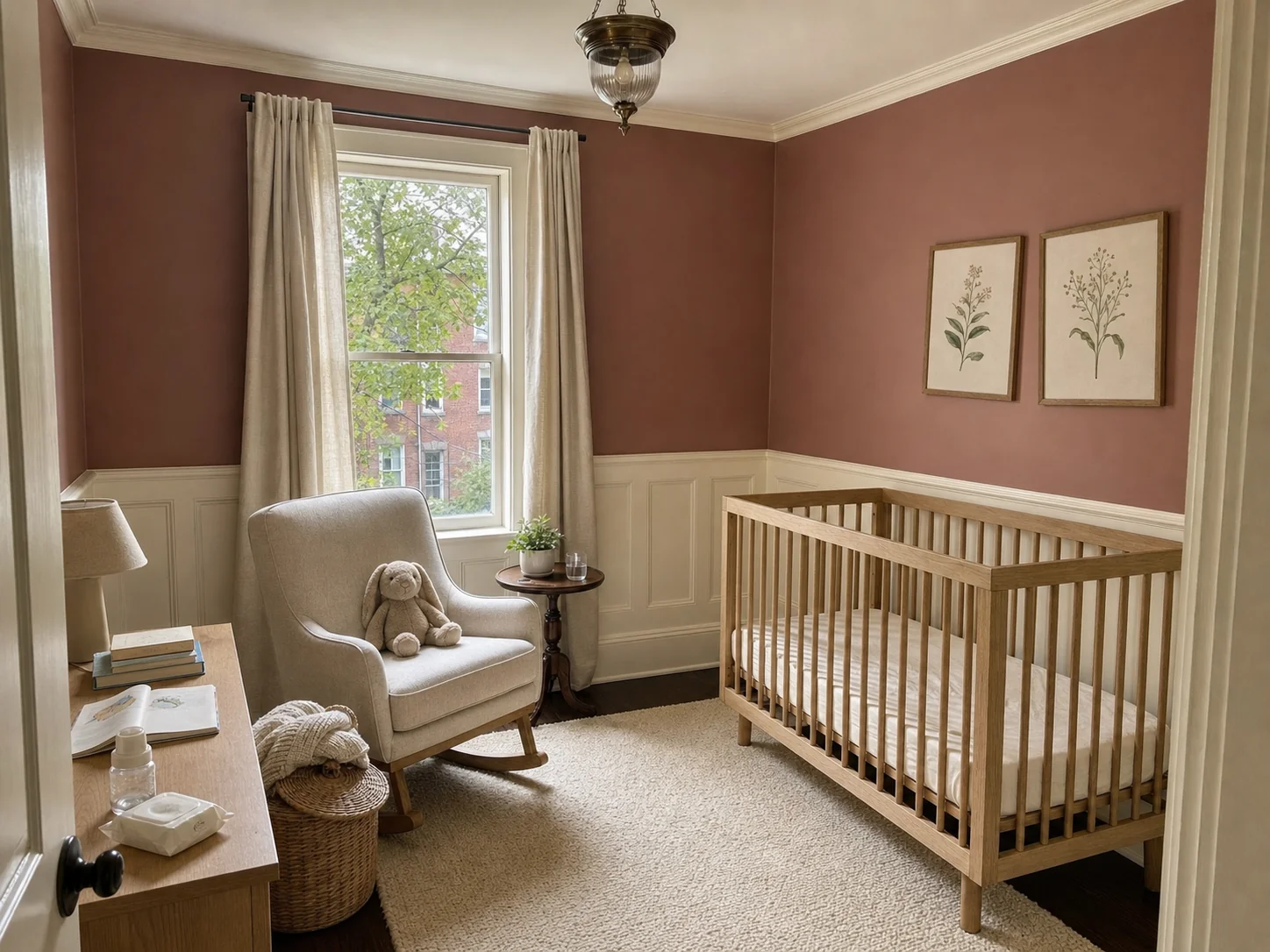
Painters DC repainted this Logan Circle, Washington DC nursery, taking glossy greige walls to a warm terracotta while keeping the wainscoting and trim a soft white. The parents wanted the small room to feel like a nursery rather than a hallway, without losing its period detail.
A small rowhouse nursery with wainscoting and older plaster. Nothing structural changed — the color scheme did the work.
A rowhouse nursery — see painting services in Logan Circle.
Upper walls, wainscoting, chair rail, and surrounding trim as one scope.
Glossy greige gave way to a warm terracotta above the wainscoting line.
The pendant light, botanical prints, crib, and the room's period wainscoting.
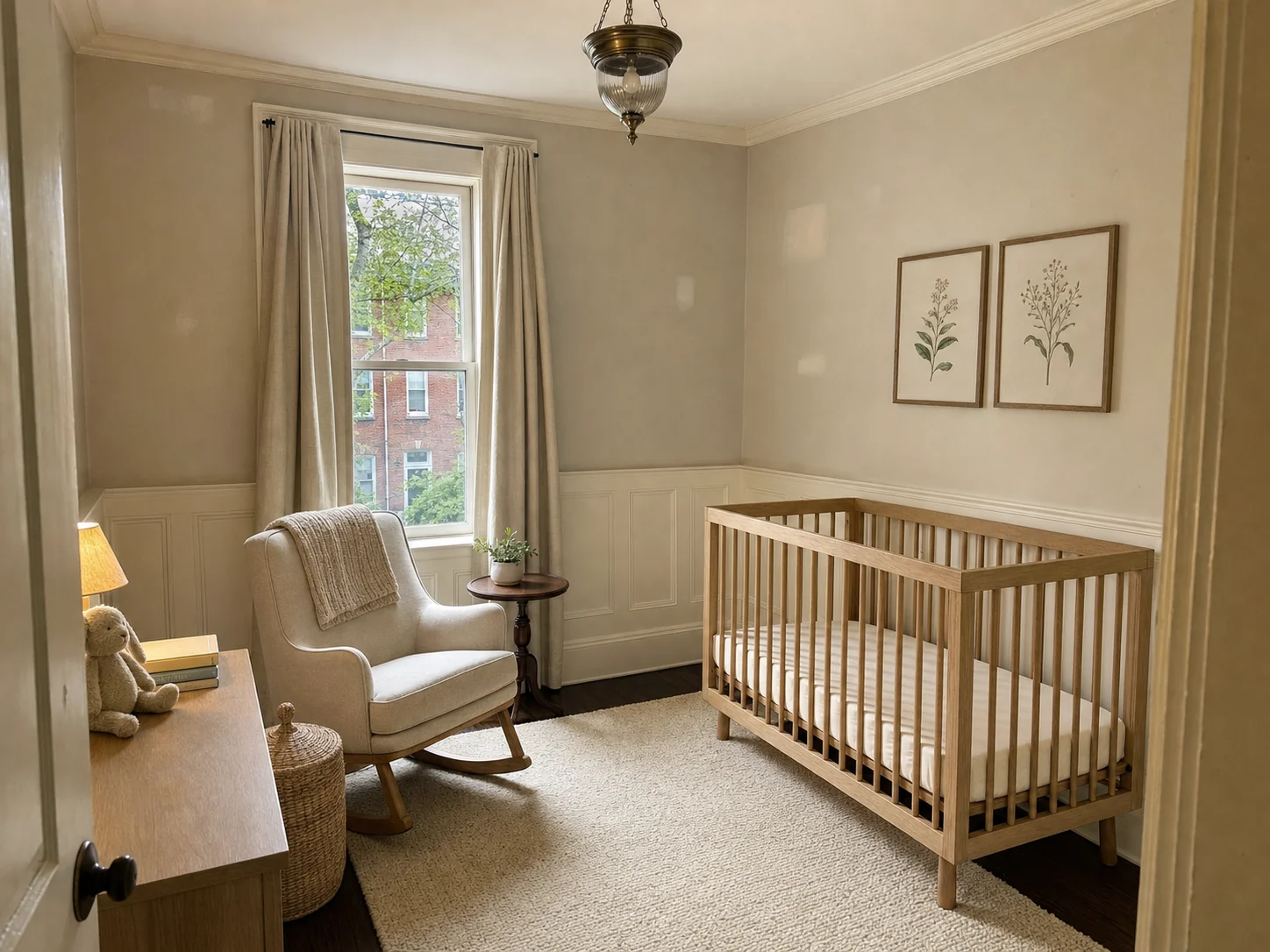
Same room, same joinery, same layout — the finish is what changed.
The nursery was already furnished and already had its millwork. What it did not have was a color that said the room belonged to a child.
A glossy greige covered the upper walls and read as circulation space — the kind of neutral that works in a hallway and disappears in a bedroom. The wainscoting, chair rail, and trim were all there, but the room felt unassigned.
Rather than change anything physical, the parents changed the palette. Keeping the wainscoting and trim white and warming only the upper walls was the smallest change that would shift the room's character — a scope decision that sits inside interior painting in Washington, DC, not renovation.
A warm terracotta went on the upper walls above the chair rail, with the wainscoting and trim carried in a soft white. That means a clean, deliberate line along the chair rail and even coverage across older plaster, which is the part of a small room that shows every shortcut. The pendant light, prints, and crib stayed in place.
The room reads as a nursery now. The terracotta gives the white wainscoting something to sit against, the botanical prints and pendant look chosen rather than placed, and the period detail is more visible than it was in a single flat color.
As general guidance rather than a claim about any one job: in a compact room with a chair rail and wainscoting, accuracy at the edges matters more than the color you choose.
Settling a warm color against your own daylight, floors, and trim is what a color consultation is for, and our guide to interior painting costs in Washington, DC explains what drives a room-by-room number.
Book a free consultation →A nursery is a small room people spend quiet hours in, at close range. That raises the standard on the details nobody photographs.
Two colors meeting at a chair rail means one hand-cut line running the room. In a space this size it is visible from every seat.
Rowhouse plaster carries hairline cracks and patches that a warm mid-tone will show. That puts the weight on wall preparation rather than the paint.
Wainscoting and walls rarely take the same sheen — our guide to eggshell versus satin covers how that choice changes both wear and appearance.
The white on the wainscoting has to sit correctly beside terracotta. Our notes on choosing a trim white work through warm and cool options.
The fixed elements here are soft: white wainscoting, a pendant light, botanical prints, pale bedding. A cool greige left all of that floating. A warm terracotta on the upper walls gives the prints and the pendant a field to read against, and holding the wainscoting and trim in white keeps the lower half of the room light so the space does not close in. Two-tone walls also do something practical in a small room: they break the height into parts, which makes a compact nursery feel considered rather than cramped — the same planning our DC rowhouse painting guide applies room by room.
It is a design choice, not a rule. In this Logan Circle nursery the room already had a chair rail and wainscoting, so keeping the lower half white and warming only the upper walls used detail that was already there — and kept the small room from feeling heavy.
Not on its own. Here the wainscoting, trim, and ceiling stayed light, so the terracotta reads as warmth on the upper walls rather than a box closing in. What tends to shrink a small room is carrying one dark color over every surface, including the trim.
Yes. Walls, chair rail, and wainscoting are handled as one scope so the line where the two colors meet is cut once, in sequence. Whether the ceiling or the hallway outside the room joins that scope is easiest to decide in person.